
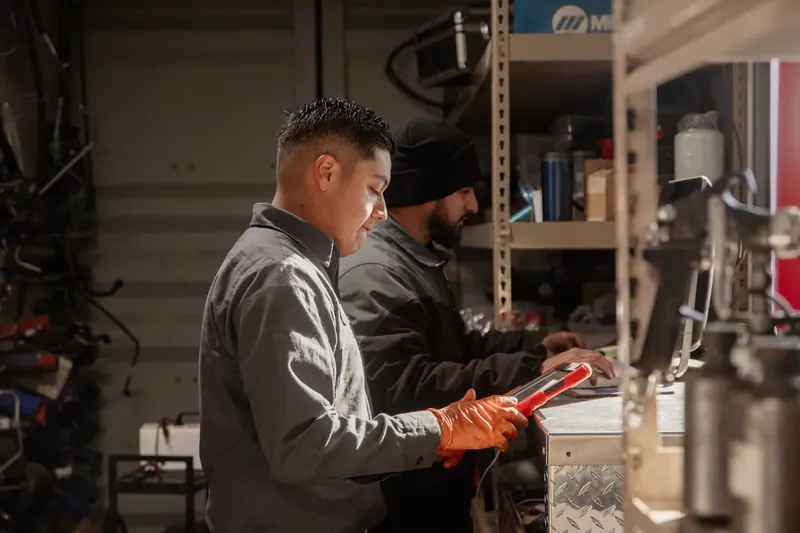
The cheapest repair is the one you catch on a walkaround. These seven checks cover the systems that put most heavy-duty trucks on the shoulder: fluids, tires, brakes, suspension, electrical, lights, and aftertreatment. Do the simple ones every trip, and let a shop handle the measuring and the deeper inspections on the schedule your OEM and duty cycle call for.
1. Engine oil and other fluids
Check engine oil, coolant, power steering fluid, and washer fluid. Look under the truck for drips and wet spots. Check the coolant color and level only when the engine is cool.
A falling level means a leak or consumption, and either needs an answer. Oil that is dark and gritty, coolant that looks rusty or oily, or any milky fluid is a reason to stop and have it looked at. Follow the OEM oil and filter intervals, and shorten them if the truck sees heavy idling, dust, or short trips. Our oil and fluid service covers the rest.
2. Tires and wheels
Check pressure on every tire when cold, and look at tread depth, sidewalls, and valve stems. Watch for uneven wear, which points to alignment, suspension, or inflation trouble. Look for bulges, cuts, exposed cord, and objects stuck in the tread.
Check lug nuts for looseness or rust trails, and wheel seals for oil leaks. A blowout can take out fenders and air lines, so a minute here pays off. See our tire repair page.
3. Brake system
For air brakes, build full pressure and listen for leaks. Check the air tanks and drain moisture per your procedure. Look at the chambers, slack adjusters, and hoses for damage. Watch for brake drag and heat after a drive.
A shop checks pushrod stroke, lining thickness, drum condition, and cam and bushing wear. Out-of-adjustment brakes are a common inspection violation, so measure them instead of guessing. More in our guide to air brake and air leak repair.
4. Suspension and steering
Look for broken or shifted leaf springs, cracked or leaking air springs, worn bushings, loose U-bolts, and damaged shocks. In steering, check for play in the wheel, worn tie rod ends and drag links, and leaks at the steering gear.
Symptoms include wandering, pulling, a clunk over bumps, and tires that wear in odd patterns. Do not treat a loose steering component as a later problem. If you suspect play, have it checked before the next trip.
5. Batteries and electrical
Look at battery terminals for corrosion and loose clamps. Check cable condition and the alternator belt. Slow cranking, dim lights, and repeated dash warnings point to charging or connection issues.
A shop can load-test batteries, check charging output, and inspect grounds and wiring. Electrical faults are also behind many intermittent complaints, which is where diagnostics and electrical work comes in.
6. Lights and signaling
Walk around with the lights on and check headlights, turn signals, brake lights, markers, clearance lights, and the trailer connection. Look for cracked lenses and damaged wiring. Check the horn, mirrors, wipers, and reflective tape.
These items are cheap to fix and easy to cite. They also matter at night in traffic, where being seen is a safety issue.
7. Diesel aftertreatment
Newer trucks use a DPF, SCR, and often EGR. Watch for warning lights, derate messages, and frequent regeneration. Check DEF level and quality, and keep an eye out for leaks or damaged lines.
Short trips, long idle periods, and the wrong oil can load up the DPF. Ignoring a warning lamp tends to end with a derate. Bring it in for service and keep the system intact. We do not recommend or perform emissions deletes. See our EGR and DPF page.
How to use this list
Split it into two tiers.
Every trip, driver level:
- Walkaround for leaks, tire damage, and loose parts
- Lights and signals
- Fluid levels where accessible
- Air build-up and leak check
- Dash warnings
On a schedule, shop level:
- Brake measurement and adjustment
- Suspension and steering inspection
- Battery and charging tests
- Fluid and filter service
- Aftertreatment diagnostics
- Alignment and tire rotation
Typical intervals vary by duty cycle, so follow the OEM schedule and set tighter checks for severe service. Local pickup-and-delivery, heavy hauls, and desert heat all change how often you should look.
Keep records
Write down what you inspected, what you found, and what you did. A simple log shows wear trends, supports warranty claims where they apply, and helps with inspection readiness. It also tells us what changed when a problem shows up.
When to stop
Do not drive with air pressure that will not hold, loose wheel components, steering play you can feel, brake smoke, a hot wheel end, or any warning that the manual says to pull over for. Call for roadside assistance or towing instead of pushing your luck.
Get it checked in Fontana
We run these checks every day in the Inland Empire. Our preventive maintenance service puts all seven on one visit, in the shop or at your location. Call or text (909) 549-7587.