
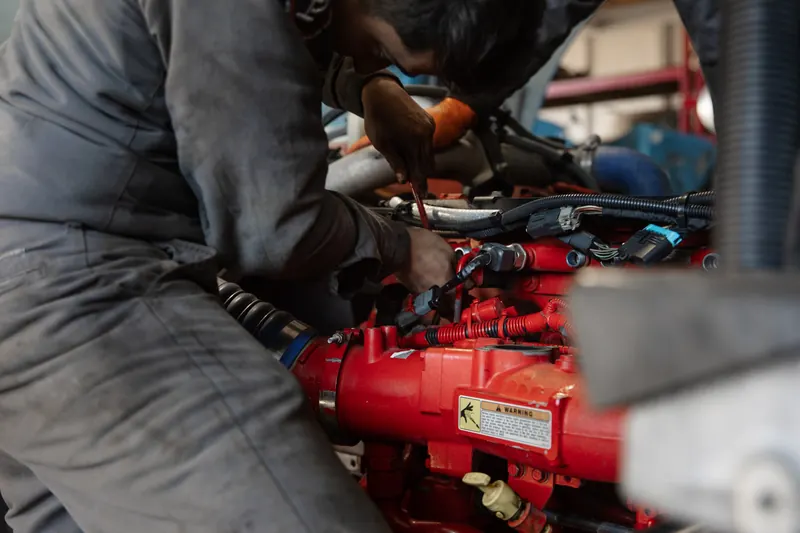
A fleet that keeps up with maintenance burns less fuel per mile and gets more life from its engines. Dirty filters, low tires, dragging brakes, and failing sensors all make an engine work harder. A structured preventive maintenance program finds those losses before they add up across every truck on your roster.
Why fuel and engine life go together
Both come down to how hard the engine has to work and how clean it stays. An engine that breathes freely, runs at the right temperature, burns clean fuel, and pushes against little drag uses less fuel and wears more slowly. Anything that adds friction, heat, or contamination raises both costs.
We do not promise a specific fuel savings number, because it depends on the truck, route, load, and driving. What we can say is that these items move fuel economy and wear in the right direction when you keep them in shape.
Systems that affect fuel use and longevity
Lubrication and filtration
Clean oil and good filters protect bearings, rings, and the valvetrain. Use the oil grade the OEM specifies, and follow the interval for your duty cycle. Heavy idling and dusty work call for closer attention. Oil analysis can show wear metals, fuel dilution, and coolant leaks early, and many fleets use it to tune their drain intervals.
Cooling
An engine that runs too hot or too cold suffers. Check thermostats, fan operation, hoses, the radiator, and coolant condition. Low coolant or a weak water pump can lead to overheating and head damage. See our coolant systems work.
Air intake and charge air
A restricted air filter or a leaking charge air cooler pipe forces the engine to work harder and can raise exhaust temperatures. Inspect air filters, intake piping, clamps, and the charge air cooler for leaks and damage.
Fuel system
Replace fuel filters on schedule and drain water separators. Contaminated fuel hurts injectors and pumps. Look for leaks and air in the system, and address hard starting or rough running early.
Aftertreatment
EGR, DPF, and SCR systems need to work properly for the truck to run right. A clogged DPF, a stuck EGR valve, or a failing sensor can raise fuel use and trigger derates. Fix the cause and keep the system in place. We do not perform deletes or defeat tunes. Our EGR and DPF page explains what we do.
Brakes, wheel ends, and tires
Rolling resistance and drag cost fuel. Underinflated tires, misaligned axles, dragging brakes, and dry or tight wheel bearings all make the engine pull harder. Check tire pressure often, keep alignment correct, and inspect wheel ends. Our truck and trailer alignment service helps here.
Transmission and driveline
Low or worn fluid, worn u-joints, and poor driveline angles waste power and add heat. Service to the OEM schedule and watch for vibration.
Electrical and sensors
Weak batteries and faulty sensors can cause poor running and wrong readings that lead to wasted fuel. Keep connections clean and scan for faults.
Building a PM program that works
- Start with the OEM schedule. Use engine, transmission, and axle makers’ intervals as the base.
- Match intervals to duty cycle. Idle-heavy, stop-and-go, and heavy-haul trucks usually need tighter schedules than steady highway units.
- Use service tiers. Short, frequent checks, with deeper inspections at larger intervals.
- Adjust for season and region. In the Inland Empire, heat, dust, and traffic all load the truck.
- Track every unit. Keep a history of services, findings, and repairs.
- Review the data. Repeat failures and rising fuel use are signals to change the plan.
Inspection depth
A common structure uses light, intermediate, and full inspection levels. The light level covers fluids, leaks, tires, lights, and a walkaround. The middle level adds brake measurement, suspension and steering checks, and battery tests. The full level adds deeper work such as wheel-end inspection, driveline checks, and aftertreatment diagnostics. Your own labels and mileage or hour triggers will depend on your operation, so set them with your shop.
What to measure
Track fuel use per truck, downtime days, roadside calls, repeat repairs, and inspection results. Compare the same truck over time, and compare trucks with similar work. Keep the data simple, because a plain spreadsheet that gets used beats a complex system that gets ignored.
Driver habits
Drivers affect fuel and engine wear every day. Smooth acceleration, steady speeds, limited idling, and proper warm-up and cool-down all help. Pre-trip inspections catch tire and leak problems early. Give drivers an easy way to report issues, and respond so they keep reporting.
Get it checked in Fontana
If you run a few trucks or a few dozen, we can set up a schedule around how you work and carry it out in our Fontana shop or at your yard. Start with our fleet maintenance page, or ask about preventive maintenance for a single truck. Call or text (909) 549-7587.