
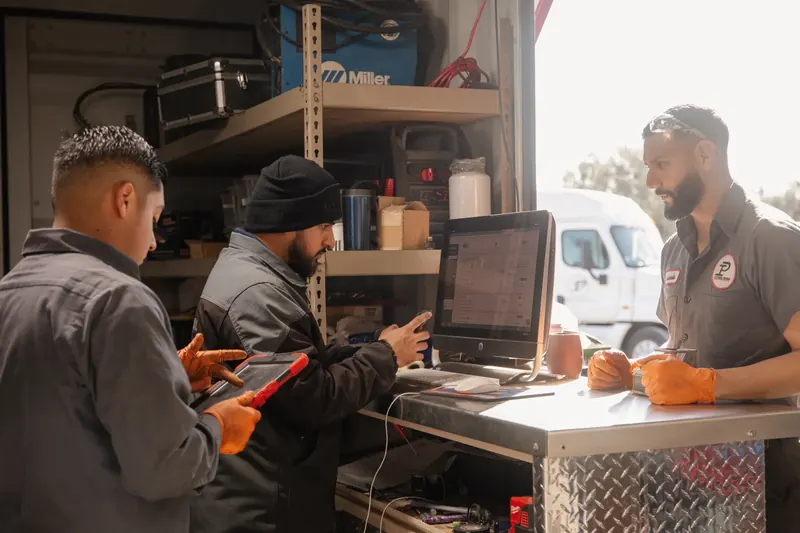
Preventive maintenance matters because a truck that is down earns nothing, and most breakdowns have a warning sign weeks earlier. A scheduled inspection finds worn parts, small leaks, and drifting adjustments while they are still cheap to fix. It also keeps you ready for inspections and keeps the truck working when the load is waiting.
What preventive maintenance actually is
It is a planned set of inspections and services done on a schedule, before something fails. The schedule comes from the engine, transmission, and axle makers, adjusted for how you use the truck. Corrective repair comes after a failure. Preventive work comes before.
What it prevents
- Roadside breakdowns. Towing, missed delivery windows, and a driver sitting on the shoulder cost more than the service would have.
- Chain-reaction damage. A leaking coolant hose can overheat an engine. A dry wheel bearing can lose a hub. One small fault takes out expensive neighbors.
- Safety incidents. Brakes, tires, steering, and lights are all inspection items for a reason.
- Compliance trouble. Violations and out-of-service orders slow you down and hurt your record.
- Early wear. Clean oil, correct fluid levels, and proper adjustment let parts last.
The systems that matter
Engine and lubrication
Oil and filter changes, fuel filters, air filters, belts, and hoses. Follow the OEM interval and shorten it for heavy idling, dust, or severe duty. Oil analysis can help fleets decide on drain intervals, but it does not replace the inspection.
Cooling system
Check coolant level and condition, hoses, clamps, the radiator, the water pump, and the fan. Overheating is hard on engines. Our coolant systems page covers the common failures.
Transmission and driveline
Fluid and filter service, mounts, u-joints, slip yokes, and center bearings. Catch leaks and vibration early.
Brakes
Measure lining thickness and pushrod stroke, inspect drums, chambers, and slack adjusters, and test the air system for leaks. A good shop writes the numbers down instead of saying “looks okay.”
Suspension, steering, and tires
Bushings, springs, shocks, tie rods, and alignment. Tire pressure and wear patterns tell a lot about what is going on underneath.
Aftertreatment
DPF, SCR, DEF, and EGR components need attention too. Regeneration problems and sensor faults can be found before a derate. We keep emissions equipment working as designed and do not support deletes.
Electrical
Batteries, charging, wiring, connectors, and lights. Corroded grounds cause odd faults that waste a lot of diagnostic time.
Setting a schedule
There is no single interval that fits every truck. A long-haul tractor on steady highway miles lives a different life than a drayage truck in port traffic or a dump truck on rough ground. Here is a sensible way to build the plan:
- Start with the OEM service intervals for each component.
- Adjust for duty cycle, climate, idling time, and load.
- Use tiered service levels, with light inspections often and deeper ones less often.
- Add seasonal checks, such as cooling in summer and batteries when it cools down.
- Review failure history and move intervals when the truck shows a pattern.
Records and inspection readiness
Keep a file for each truck: service dates, work done, parts used, measurements, and open items. Good records help you spot repeat problems, make warranty and resale discussions easier, and show an inspector that the truck is looked after. For fleets, consistent paperwork makes it clear which unit is due. See our DOT inspection service for pre-inspection prep.
California operators also deal with emissions rules that affect how trucks are tested and maintained. Rules and deadlines change, so confirm current requirements with the state, and see our Clean Truck Check page.
Regional considerations for the Inland Empire
Trucks around Fontana run through heat, dust, and stop-and-go traffic on the 10, 15, and 210. Heat is hard on cooling systems, batteries, tires, and hoses. Dust loads air filters. Short hauls and idling load up aftertreatment systems. Those conditions are a good reason to inspect more closely than a basic schedule suggests.
Owner-operator or fleet
An owner-operator gets the most from a simple routine: a daily walkaround, a regular service, and a mechanic who knows the truck. A fleet gets more from a program with a standard checklist, unit history, and one place to schedule it. We support both, and our fleet maintenance program can run on your schedule.
Get it checked in Fontana
Planned service costs less than emergency repair, and it keeps your truck earning. Learn more about our preventive maintenance service, available in the shop or at your location. Call or text (909) 549-7587.